Posts Tagged ‘exoneration’


Celebrating Freedom and Justice with Orlando Boquete

Anna Fitzpatrick — May 22, 2013 @ 10:27 AM — Comments (0)

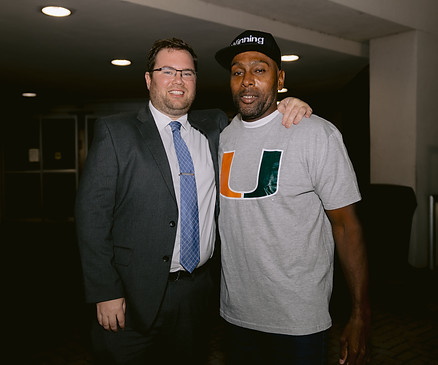
May 23, 2013 marks the seventh anniversary of Orlando Boquete’s exoneration. We would like to take a moment to celebrate not only Orlando’s freedom but the freedom restored to all exonerees.

For many wrongly imprisoned, returning to life on the outside proves to be a difficult transition, and society will have changed greatly in the time they were away. But as Orlando told the New York Times, “I feel free many, many times…I want to feel free.” Despite transitional struggles and time lost, Orlando remains determined to embrace his freedom and rebuild the life he always imagined for himself.

Congratulations, Orlando, and happy anniversary of your restored freedom!

exoneration,Innocence Project of Florida, , , , , , ,


Solitary Confinement: Re-assessing, Re-evaluating, Re-thinking

Anne — July 27, 2012 @ 4:27 PM — Comments (1)

Note: This is the first of a three-part series on solitary confinement.

Dr. Craig Haney, the nation’s leading expert on inmate mental health, and a professor of psychology at the University of California at Santa Cruz, recently testified before a U. S. Senate Judiciary Subcommittee on the Constitution, Civil Rights, and Human Rights on the effects of solitary confinement upon prisoners. Inmates in long-term confinement, according to Haney, suffer mental breakdowns from the lack of human contact that can lead to a multitude of mental, physical and emotional conditions, including psychosis, mutilations and suicide. Solitary confinement for most inmates, Haney testified, “precipitates a descent into madness” and can cause “profound, psychological damage.”

The increase in solitary confinement in the United States (since the late 1970s), according to statistics provided by Haney, is the result of the “confluence of three unfortunate trends”: mass imprisonment, the shift in responsibility for housing the mentally ill to the nation’s prison systems, and the abandonment of the notion of rehabilitation. Haney, who is also chair of UCSC’s Legal Studies program, estimated that 80,000 of the nation’s 2.3 million inmates in prisons and jails are in long-term solitary confinement. A great number of inmates have spent the majority of their prison sentences in solitary confinement, a legal and administrative practice that separates designated inmates from the prison’s general population.

Professor Haney was invited to testify by Subcommittee chairman Senator Richard “Dick” Durbin, D-Ill, at the first-ever hearing on the constitutional, fiscal, and public safety consequences of solitary confinement. Since 1971, Haney has conducted groundbreaking research into the effects of solitary confinement upon prisoners. His work has been cited in numerous scholarly journals and publications. Since 1971, he has been a leading proponent of mental health issues affecting prison inmates.  As a graduate student, he was one of the principal investigators in an academic undertaking that became known as the “Stanford Prison Experiment (SPE).” He and fellow researchers placed a group of psychologically healthy college students in a prison-like environment, randomly assigning half to the position of prison guards; the other participants were designated as prisoners.

The researchers in the SPE carefully monitored participants’ behavior during the designated period, eventually ending the experiment, however, upon their observation that the otherwise “psychologically healthy volunteers in the simulated prison [setting] rapidly deteriorated into mistreatment and emotional breakdowns.” Thus began Haney’s prolific research into the effects of solitary confinement upon prisoners who have been incarcerated for extended periods of time. Since the SPE, Haney’s work has extended into the effects of capital punishment as well. In 2011, his research was cited numerous times in the majority opinion when the United States Supreme Court upheld a ruling ordering California to release 46,000 prisoners in an effort to relieve the state’s overcrowded prisons.

While a great portion of Haney’s testimony before the Subcommittee centered upon the effects of solitary confinement, he also addressed the state of  prisons’ mental health workers, individuals who are assigned the task of treating inmates who have mental health issues.  Oftentimes the workers are (themselves) stressed and too overburdened to render effective care with respect to noticeable improvements in inmates’ mental health issues. Such inadequate  healthcare not only harms prisoners, Haney testified, it also “endangers the public once those prisoners are released” from prison. Without adequate mental healthcare as well as available, external counseling, prisoners, once released from the confines of a structured environment, are oftentimes present and “untreated” in the public domain.

Many times, according to statistics  provided during the hearing, non-treated inmates (or inadequately treated inmates) commit crimes which cause their return to the familiar, institutional environment of incarceration. A vicious cycle of re-institutionalization becomes, in many cases, the norm. An overburdened healthcare system speaks not only to an inadequate system of governance–as it relates to prison reformation–it also articulates a much broader statement in terms of the responsibilities of government in being fiscally accountable to those who work in conditions as presented in California’s (and other states’) prison facilities.

Haney’s testimony before the Subcommittee concluded on multiple points of note. According to Haney, we put “far too many people in prison, we pay far too little attention to what happens to them while they’re there, we keep them there for far too long, then we disregard what happens to them when they try to make the difficult transition to come out into the free world.” In April 2012,the National Academy of Sciences appointed Haney to a panel to study the causes and consequences of high rates of incarceration in the United States.

Others testifying on issues related to solitary confinement included the Honorable Charles Samuels, Director of the Federal Bureau of Prisons; Christopher Epps, Commissioner of the Mississippi Department of Corrections; and former inmate Anthony Graves, who was released from Texas death row in 2010, after spending 18 years in prison for a crime he did not commit. Ten of the 18 years Graves spent on death row were in solitary confinement. He is the founder of “Anthony Believes,” an organization dedicated to the health and well-being of individuals consigned to death row and solitary confinement. His front-line advocacy has garnered national attention on issues related to solitary confinement and prison reformation.

exoneration,justice,legislation,prison,Science, , , , , , , ,


An Uncommon Reunion

Anne — June 05, 2012 @ 10:22 AM — Comments (1)

In the curious case of Brian Banks, the 26-year-old California man recently exonerated for the rape of a young woman in 2001, Facebook can be credited somewhat with helping him not only gain his freedom, but pursue a lifelong dream of playing professional football. While users of the social media site often use the service to connect with friends and locate long-lost acquaintances, Banks utilized it for a greater purpose: to bring his accuser, 24-year-old Wanetta Gibson, to the truth of her false accusations for a crime that never occurred.

In the absence of DNA and other crucial evidence that could free Banks from a decades-long nightmare, a hold-your-breath meeting–arranged by Banks and agreed upon by Gibson–in an investigator’s office would pave the way towards the convicted man’s freedom. Gibson admitted that Banks had not sexually assaulted her, nor had he kidnapped her as had been widely reported. On video and audio tapes that have gone viral on the internet, Gibson can be heard twice, in response to the investigator’s inquiry of the alleged assault, “No he did not [rape me].” There is no coercion, prompting or influence on the investigator’s or Banks’ part. She speaks clearly, forthrightly and without hesitation to all questions posed before her.

The California Innocence Project assumed Banks’ case and assisted in the subsequent legal affairs that would lead to his freedom. He spent five years behind bars and five years on probation, wearing an ankle monitor so that his every move could be tracked. He also wrestled with being labeled a “sex offender.”

Prior to Wanetta Gibson’s accusation and Brian Banks’ subsequent incarceration, he had been highly recruited by a number of prominent colleges across the nation to play football. He was headed to a great collegiate career at USC, playing the sport he loved when his world came to a screeching halt following accusations of the rape. Despite the absence of DNA evidence or other evidence which could tie him to the alleged act, Banks’ defense attorney encouraged him to accept a plea agreement in exchange for a 41-year sentence because, according to published reports, the jury would see, among other “descriptives,” a “muscular black teenager” and not, presumably, an athletically-gifted young man headed to college on a scholarship. Prior to Banks’ incarceration, he had never been in trouble with the law. For Banks, though, a “short” sentence behind bars was a deal worth taking: He was young and would be free in a few years. A “brief” stay in prison was significantly more accepting over the prospect of remaining behind bars until middle age. As a result, he accepted the deal, languishing in prison for five years with, he believed, a career gone as quickly as the myriad collegiate offers that had come earlier.

Enter Wanetta Gibson and Facebook.

Gibson’s Facebook “invitation,” a casual, as though-nothing-had-happened appeal  was, by anyone’s measure, a strange befriending. With the taxed-down monetary settlement (awarded by the school district where she was a 15-year-old student at the time of the accusation) exhausted years ago, her motive for appealing to Banks remains suspect. Various news accounts accuse her (and her mother, Wanda Rhodes, 52) of continuing a charade of monetary acquisition by any means necessary in an effort to remain one step ahead of creditors seeking payment for big-ticket purchases made with the approximately $750,000 settlement.

Former neighbors and acquaintances of the pair do not paint a pretty or wholesome picture of the twosome. Wanetta Gibson, now a mother, and her mother, according to social services and legal documents, are well-known throughout the region as they attempt to evade legal and social service officials. They are, to some who know their story as it relates to Brian Banks, joined at the hip, and are always watching their backs.

In an act of desperation, according to case watchers, Wanetta Gibson may have mindlessly befriended Banks on the social media site in an effort to redeem herself for the travesty which she caused years earlier. Others theorize that the accuser may have wanted to wrest whatever finances she  believed he may have accumulated in prison, because she was currently unemployed, had exhausted all means of legally obtaining money and believed he would perhaps be grateful for her acquaintance (again!) since he was no longer behind bars. One of her primary concerns seems to have been the possibility of repayment of the settlement based on her false testimony.

Others speculate that the mother/daughter duo was, once again, “up to no good,” that something sinister was resting just below the surface, another scam perhaps. Banks posits the notion that Gibson most likely wanted to resume a relationship, that she believed that he may have in fact forgiven her for the years spent behind bars for the lies she had told, and that they could indeed move forward, together, despite the past. Whatever the motive for Gibson’s sudden appeal on Facebook doesn’t, however, cause him to languish over her intent.

Like many other exonerees who have been falsely accused of crimes they did not commit, Banks is putting the past behind him and moving into a different arena, one that doesn’t have bars, ankle monitors or daily activities ordered by officials who work in state-run facilities.

Major newspapers across the country are reporting on Banks’ slow turn of luck: He is scheduled to try out with the Seattle Seahawks football team on June 7th, and a number of other professional teams have expressed interest in him as well. If, however, he doesn’t make the roster with any of the teams, he has been offered, according to Derrick Hall, CEO of the Arizona Diamondbacks baseball team, a place of employment with the organization. Hall watched Banks in a recent interview and was greatly impressed with the maturity of the young man who appears to harbor no resentment or ill-will toward his accuser or the fact that one-fifth of his life was spent behind bars for a crime he did not commit.

While a number of wrongful incarcerations can be attributed to a myriad of factors, including witness misidentification, poor forensic science, judicial misconduct, “bad” policing, coerced confessions, and ineffective legal counsel (which runs strong in this case), very few cases of exoneration can be attributed to walk-in-the-door, sit-down confessions of truth by an accuser, as in this case. Wanetta Gibson’s liberal entry into the investigator’s office was not only a surprise to Banks–he didn’t believe that she would show up–her confession of truth set in motion a string of events that set the wheels of justice rolling in Banks’ favor. Her conscience or the consciousness of what she’d done are theories up for grab. Only she can make a truthful case of her past and present behavior.

In this socially driven culture of tweets, texts, emails, “breaking news,” and 24/7 news bytes, Facebook has, in this instance, proven to be a savior for Brian Banks. It is reported that he remarked that he “didn’t believe” what he saw on his computer screen when he saw that Gibson had contacted him with the missive to “let bygones be bygones.” While such a casual dispatch may have been easy for her to issue, it will prove for Banks to be one which will indeed direct his path toward new and glorious opportunities and beginnings. Good luck, Brian.

exoneration,judicial,justice,prison,Science, , , ,


Weekly Update: Post-Conviction DNA and Eyewitness Reforms, but Innocent Men Still Behind Bars

Chelsea — February 09, 2012 @ 5:59 PM — Comments (0)

Innocent Man Remains on Death Row

Tyrone Noling has been held on death row in Ohio since February 21, 1996. Noling has maintained his innocence since that day.

In the mid-1990s Tyrone Noling was convicted of the murders of Cora and Bearnhardt Hartig, an elderly couple. Noling was convicted in 1995, five years after the murders actually occurred, and was not linked to the crime by anything other than several eyewitnesses; eyewitnesses, mind you, that did not come forward until several years after the crime. Three witnesses placed Tyrone at the scene of the crime and claimed to have heard him confess to the murders. All three witnesses have now claimed that they only gave these statements because they were threatened by prosecutorial investigator Ron Craig.

Tyrone has filed for various appeals and continues fighting to prove his innocence, but the state of Ohio seems, for reasons unknown, to want to keep him on death row. In spite of the fact that there  is no physical evidence linking him to the murders and that all witnesses have recanted, Tyrone still has not been granted a new trial. Read more here.

Massachusetts Post-Conviction DNA Testing Bill Approved

A bill that will bring Massachusetts up to speed regarding prisoners’ right to post-conviction DNA testing. Up until this point Massachusetts has been one of four states without measures allowing prisoners access to this testing, thereby limiting the ability for innocent people to prove that they were wrongfully convicted. Massachusetts Lawyers Weekly explains that, “in order to become eligible for post-conviction access to DNA evidence, an individual serving a sentence must win a motion before a judge that shows the evidence could possibly result in an acquittal.” The bill, which the Senate approved last July, was unanimously approved by the House yesterday and is now headed to the governor’s desk.

Virginia Takes Its Time Freeing an Innocent Man

Bennett Barbour was convicted in 1978 of a rape that he did not commit. Barbour only served 4 1/2 years of his 18 year sentence (he was convicted of robbery, as well), as he made parole the first time he came up for consideration. However, he was not proven innocent until several weeks ago when the Virginia Department of Forensic Sciences finally released the information that DNA testing proved Barbour was innocent. The Department of Forensic Sciences has been working on DNA testing many old cases as a part of their post-conviction DNA project. This project seeks to expose wrongful convictions and solve some cold cases.Unfortunately, it would seem that the releasing the information that Mr. Barbour was innocent was not a priority, as the department had the DNA results for 18 months before they informed Mr. Barbour. Read more here.

Retired Connecticut Supreme Court Justice David Borden Pushes for Eyewitness Identification Reform

Connecticut is currently in the process of adopting various measures to reform eyewitness identification. A law was passed last year that mandates that police use a double-blind procedure in conducting lineups. This double-blind procedure refers to conducting a line-up where the administrator does not know who the suspect is and the witness is told that the officer does not know who the suspect is. This decreases the possibility of police officers influencing, accidentally or otherwise, the witnesses selection. The law added a caveat though, stating that law-enforcement should adopt this procedure “where practicable.” The law also set up a task for to investigate eyewitness identifications; the task force is headed by former Connecticut Supreme Court Justice David Borden and has recommended that police start using sequential photo lineups as opposed to side-by-side lineups. Read more here.

exoneration,justice,post-conviction, , , , , , , , ,


Steppin’ Out With the Innocence Project of Florida Tickets Now Available

Chelsea — February 08, 2012 @ 1:40 PM — Comments (0)

Tickets for the Innocence Project of Florida’s First Annual Gala are now available! Join us for our inaugural celebration dinner honoring those who consistently step out to unlock the truth for the innocent in Florida’s prisons. The dinner program will highlight the inspiring stories of the 13 Florida DNA exonerees and honor those who have had a significant impact on improving justice in the state of Florida.

The gala will take place at the Four Season Hotel in Miami, FL on April 27, 2012. The evening will include a VIP reception with honorees, exonerees & speakers; silent auction with original artwork; dinner with a keynote speaker; and awards program.

This special event seeks to raise $100,000 to allow the Innocence Project of Florida to continue its mission to find and free innocent people from Florida prisons and help them rebuild their lives.

To purchase tickets for this special evening simply click here, or for more information check out the event’s page. We look forward to seeing you in April!

Innocence Project of Florida, , , ,


News This Week: Exoneration is Only Half of the Battle & DNA Reform

Chelsea — January 31, 2012 @ 4:43 PM — Comments (1)

Exonoree Scott Fappiano Struggles After His Name Is Cleared

In 1985 Scott Fappiano was wrongfully convicted of the rape of a police officer’s wife in the Brooklyn Supreme Court. He was 23 when he was incarcerated, and remained in prison until he was proved innocent by DNA evidence and exonerated at the age of 45.

For Fappiano, like many other exonorees, exoneration was only the first step in the battle of getting his life back. Since his release, Fappiano has dealt with multiple substance abuse issues as a result of his anxiety and post traumatic stress that he developed as a result of  his wrongful incarceration. Fappiano now faces more jail time for crimes he admits to having committed as a member of the reputed Colombo crime family in New York. Fappiano’s attorney argues that his ordeal with the criminal justice system has already taken a huge toll and is asking the court for leniency. Read more here.

UPDATE: Fappiano received a light sentence for his use of extortion and violence in collecting a debt. On Wednesday he was sentend only with the month that he had already served  before making bail. He will also have to pay a $40,000 fine and serve 180 hours of community service.

Pennsylvania Legislature Considers Compensation Laws for Exonorees

Pennsylvania’s legislature is discussing wrongful convictions, their causes and potential remedies including compensation for exonerated victims. Currently, Pennsylvania is one of 28 states that does not compensate its exonorees once they are released from prison. According to an article from Pennsylvania’s Innocence Institute, exonorees receive less assistance reentering into society than do parolees. Parolees can receive help finding house, with job training, and then help with finding jobs.

Not so with victims of the justice system.

Exonoree Danny Tyus lost everything during his time behind the jailhouse door; his children no longer recognize him as their father, and he lost his house, his car, and all of his financial holdings. It seems incredibly backwards that if wrongfully convicted people serve their sentence and are eventually let out on parole then they would have access to a litany of resources to aid in their reentry to society, yet those proven innocent, those who have served time for crimes that they never committed, are sent out without any help or guidance. Are we to encourage criminal behavior? Or just to reward those who stay silent and suffer in spite of their innocence.

The proposed compensation legislation would provide $50,000 per year spent in prison to exonerated citizens. Hopefully Pennsylvania’s legislature will move forward on the road towards legal reform and pass the bill, soon.

Jackson, MS Exonoree Receives Settlement Result of Police Misconduct

Cedric Willis sued the city of Jackson, MS, as well as four police officers. His suit finally paid off with the city agreeing to a $195,000 settlement with Mr. Willis. Cedric has already been rewarded $500,000 in compensation for his wrongful incarceration to be paid by the state over 10 years.

Willis served 12 years in jail for a homicide and three counts of robbery, none of which he committed. His suit argued that Jackson police officers acted unprofessionally by lying about eyewitness testimony that led to Willis’s arrest and ultimately his conviction.

Willis’s attorney Rob McDuff was disappointed with the settlement, but cites a recent U.S. Supreme Court decision regarding eyewitness identification as making this sort of case difficult to win.

Hopefully this settlement and Willis’s previous compensation will aid in his transition back into society. Read more here.

Law & Order Star Mariska Hargitay Endorses  DNA Database Expansion

Last week New York Governor Andrew Cuomo announced his desire to make New York the first state to expands its DNA database to improve the justice system. Currently, DNA is collected from only about half of defendants convicted of a crime. Cuomo’s initiative would expand that collection to cover all crimes, which he says would aid in solving and preventing future crimes as well as exonerating wrongfully convicted individuals.

Law & Order: SVU star Mariska Hargitay released a video yesterday expressing her support for this initiative. Hargitay, who has played New York Detective Olivia Benson for over a decade, said that this role opened her eyes to the realities of sexual and physical abuse that occurs in this country every day. In her video she focuses on how the expansion of the DNA database would bring healing and justice to the survivors of sexual and physical assaults.

embedded by Embedded Video

YouTube DirektMariska Hargitay Support DNA Expansion

Chicago Exonoree Thaddeus Jiminez Wins $25 million for wrongful conviction

Thaddeus “TJ” Jiminiez, spent 16 years in a Chicago prison for a murder he did not commit. Now, three years after Jiminez was exonerated and received his certificate of innocence, he won a civil suit against the city of Chicago and was awarded $25 million. His attorneys believe this award to be the largest ever received from a wrongful conviction civil suit.

At 13-years-old Jiminez was convicted of the murder of 19-year-old Eric Morro. The murder was believed to have been a gang-related shooting. Jiminez was freed after a witness recanted and police examined a recording of another man confessing to the shooting.

Unfortunately, this decision may not be the end of the ordeal for Jiminez. A spokesman for Chicago’s law department Roderick Drew said that the city is exceptionally displeased with the outcome and will be exploring all available options.

exoneration,legislation,post-conviction, , , , , , , , , , , ,


Six Years Ago Today

Seth — January 23, 2012 @ 9:23 PM — Comments (1)

Alan Crotzer, walking free with his attorneys Sam Roberts (left) and David Menschel (right), on January 23, 2006, after 24.5 years of wrongful incarceration.

Congrats Alan on six years of freedom.

exoneration, , , ,


It’s Time for a Moratorium

Anne — January 11, 2012 @ 1:35 PM — Comments (0)

Four months ago, State Representative Michelle Rehwinkel Vasilinda appealed to Governor Rick Scott not to sign any death warrants awaiting his signature. As public servants, she maintained, they are “not in the business of dispensing vengeance” but are, instead, charged with keeping Floridians “safe from crime while spending the public’s tax dollars prudently.” Rep. Vasilinda’s sponsorship of House Bill 4051 (HB 4051) would repeal the death penalty in Florida. Life without parole, she argues in her letter, can serve as an alternative to capital punishment and is the “better path” in terms of the costly nature of executions carried out in Florida.

In her letter, Rep. Vasilinda cites a 2000 Palm Beach Post(PBP) report, “The High Price of Killing Killers,” which includes astronomical figures related to state-sanctioned executions. According to the report, Florida spent “approximately $51 million each year to enforce the death penalty.” While more than a decade has passed since the publication of the PBP report, the figures are certainly still relevant. While the cost of living in Florida has risen substantially since the publication of the article, it stands to reason that costs associated with state-approved executions have also risen dramatically.

With the $51 million spent on executions, the State of Florida could, maintains Rep. Vasilinda, “put 850 law enforcement officers on Florida’s streets, as well as add more Florida Department of Law Enforcement (FDLE) investigators and equipment to our arsenal against crime.” A sentence of life in prison without parole allows, she argues,  “mistakes” to be corrected or new evidence to “come to light, serving to increase faith and fairness in our justice system.” Some “mistakes,” despite a myriad of “safeguards” are, of course, irreversible. This factor alone makes a moratorium on executions worthy of consideration.

A moratorium on capital punishment in Florida is long past due and sorely needed. Let us hope that Rep. Vasilinda’s bill to repeal the death penalty in Florida will reach the hearts, souls, and sensibilities of elected officials who, during this legislative session, are in positions to make a change in the way the State of Florida conducts business.

exoneration,Innocence Project of Florida,justice,legislation,policy,prison, , ,


Three Juries Got It Wrong, Three Judges Got It Right – Finally

Susan — December 21, 2011 @ 4:02 PM — Comments (0)

If ever a case showed the power of a confession on a jury, Juan Rivera’s is the one. Even though Rivera later recanted, his confession trumped physical evidence pointing to another perpetrator. It also outweighed common sense requiring jurors to buy into the prosecution’s ludicrous theory that the Waukegan, IL 11-year-old victim was sexually active. The mind-blowing icing on the cake, however, is that three separate juries came back with a guilty verdict.

If ever a case demonstrated the need for police and prosecutors to use caution during interrogations, to videotape those interrogations, and to guard against jumping to conclusions, Juan Rivera’s is the one. He has served 20 of his 39 years behind bars for another’s crime, the 1992 rape and murder of Holly Staker. And it took a ruling from an Illinois Appellate Court (a unanimous ruling) to find Rivera’s case so defective that River’s conviction was “unjustified and cannot stand.”

“For 19 years, someone who killed Holly Staker has been on the loose – assuming he’s still alive, and yet then prosecution and investigation stopped because they were able to extract a confession that should have been seen immediately as unreliable and uncorroborated,” said Prof. Lawrence Marshall, co-founder, Center on Wrongful Convictions.

Although Rivera hopes to be free by Christmas, his family is not sure that will happen. The Lake County State’s Attorney has not yet decided whether or not to appeal the court’s decision.  The justices called the prosecutors’ explanation for the DNA results  “highly improbable,” adding that they had “distort[ed] to an absurd degree” the witness’s testimony. Read more about it and see the video at Local and Huff Post.

In another infamous case, murder charges against Jerry Hobbs were dropped last year after he spent five years in jail awaiting trial for the stabbing death of his eight-year-old daughter, Laura Hobbs, and her friend, Krystal Tobias, 9.

Prosecutors claimed that semen discovered in Laura Hobbs’ remains got there because she played in a wooded spot frequented by couples engaging in sexual activities. But DNA testing later matched Jorge Torrez, who has since been convicted and sentenced to life in prison for another rape. He also faces a separate 2009 murder charge.

Meanwhile, as an upshot to the Rivera and Hobbs cases as well as other eerily similar cases where DNA evidence exists from a nonidentified outside source, head Lake County Prosecutor Michael Waller is calling it quits as noted in the Chicago Tribune’s Chicagoland. He leaves behind him a wake of messy, unsettled cases that will likely cost the county dearly.

“Whoever takes over the office is going to inherit these messes,” said Jed Stone, a Waukegan attorney representing Bennie Starks, a target of one of the controversial prosecutions.

Waller’s not the only one leaving. Assistant State’s Attorney Michael Mermel recently announced his impending retirement as well. Sheriff Mark Curran called for him to be fired after his controversial comments about DNA evidence appeared in The New York Times.

“What troubles me deeply is the reputation that Lake County is gaining for being this hotbed of wrongful convictions,” said Mike Nerheim, a Republican candidate who served under Waller for seven years. “The job of the prosecutor is to seek justice, not just convictions.”

The outcome of these local races may indicate how strongly the public is reacting to these miscarriages of justice. We will keep you posted.

exoneration,justice, , , , , ,


A Fresh Start On and Off the Field

Susan — November 09, 2011 @ 12:28 PM — Comments (0)

What do Roy Hobbs in the movie The Natural (based on the life of Eddie Watkins), Jim Morris whose life was the basis for The Rookie, and William Michael Dillon have in common? Well… not really a whole lot except they all love baseball and found new life through it after false starts.

Watkins’ promising career faltered after serious injury; Morris grew up in a place unfriendly to young players; but Dillon was sidetracked because he was locked behind bars for a crime he didn’t commit for over 27 years. A couple of things saved him from utter despair. His music provided comfort during his days in confinement. He learned to play the guitar while he was behind bars and, since his release in 2008, he has recorded his first CD called “Black Robes and Lawyers” and is keeping busy with gigs and a few TV appearances.

But recently he got to do something he could only dream about in prison. As a member of the Tallahassee Bombers Baseball Team, he got to step up to the plate in a real game. Oh, he played basketball, flag football, softball, and handball while he was incarcerated. He was able to watch a few games on TV (fellow inmates’ wishes permitting). But playing sports as a free man had to be a thrill for a guy who was once scouted by the Detroit Tigers many years ago.

“Sports was one of the main things that kept me going,” Dillon said this week from the Roy Hobbs World Series in Fort Myers, where he is participating in the 48-and-over division. “It’s a chance to get away from things. You have no idea how important that is.”

Dillon and his teammates mean a great deal to each other. Even though he didn’t get a hit and the team lost, he says that’s not important. “It wasn’t so much about playing baseball as it was just to have that camaraderie again. I lost that in prison,” he said. “I’m a ballplayer and once you’re a ballplayer, you never lose that.”

It’s one more helping hand back into life after decades of deprivation behind bars. Freedom, as joyous as it is, was a huge adjustment for Dillon as it is for everyone who comes out to a whole new world. When he entered prison, there were no debit cards, people didn’t have computers, no worldwide web, and there was only one kind of Coke . Going to the store, learning to drive again – everything was a challenge.

At Florida State Prison, he was raped, beaten, and often ready to give up. Who could blame him? Yet he kept fighting and cleared his name after decades of trying. “Sports was an escape,” he said. “It gave me a chance to think about something else, to let other things enter my mind.”

The field of play provides an equal footing for every player. That’s all Dillon wants – a fresh start on an equal playing field. Let’s hope that continues for a long time. Learn how the Innocence Project of Florida helped at FloridaToday.com and news-press.com.

exoneration,Innocence Project of Florida, , ,

© Copyright Innocence Project of Florida, Inc. This web site is supported in part by grants from The Florida Bar Foundation.