Posts Tagged ‘FBI hair forensics’


Corrections to Past Failures of Hair Analyses

Jordan — August 03, 2012 @ 9:43 AM — Comments (0)

The First of Thousands More.

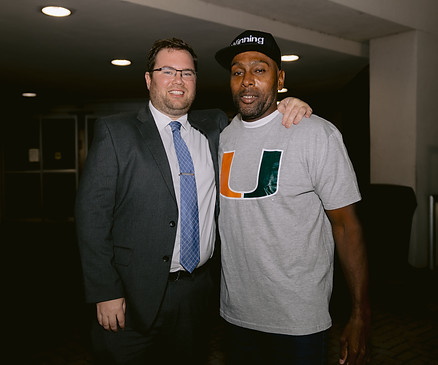
Klark Odom is one of two men exonerated in the last two months in Washington D.C. Odom’s innocence was one of many that spurred the FBI’s reinvestigation of 18,000 convictions that depended on the results of hair analyses conducted by their lab. We applaud the FBI for undertaking such a review.

As we have seen in other wrongful conviction cases, assuming that any department, agency or person is infallible can, and does, lead to wrongful convictions.

Odom became the 293rd exoneree in the United States with the U.S. Attorney’s joint motion for vacating his conviction, ending his lifelong parole and registration as a sexual offender, and enabling him to apply for wrongful imprisonment compensation.

The judge granted both motions on Odom’s birthday, July 13.

Continued Investigation Leads to Exoneration of Oklahoma Man.

The Innocence Project helped exonerate Oklahoma man Sedrick Courtney after 16 years in prison and a year dealing with the constraints of parole. He married his wife four months ago. Even his mother-in-law said, “I knew he was innocent. You could just tell.”

The original hair tests of samples from the two criminals’ ski masks were inconclusive, as they were too short for comparison to Courtney’s hair samples. However, the technician jumped to the conclusion that one bleached red hair, found in the evidence, was close enough to one taken from Courtney’s head.

It seems the jury gave more weight to this misguided lab technician’s assertion than to three alibi witnesses that vouched for Courtney during his trial. The victim’s recognition of Courtney’s “voice and a brief instance when he lifted a ski mask” also was given too much weight by the jury .

For years, the Tulsa Police (TPD) told his attorneys that evidence from the case had been destroyed. When the Innocence Project came to his assistance in 2007, TPD continued to maintain that the evidence had been destroyed. But last year, the evidence turned up in the Tulsa courthouse. Subsequent DNA testing revealed that the hairs were not Courtney’s, thus proving his innocence.

Had the evidence not been found, Courtney would still be walking around with a false conviction on his record, taking off work to comply with parole constraints. Organization is an important aspect to assuring justice. We cannot rely on getting lucky by having evidence simply show up.

justice,Science, , , , , , , , , ,


FBI to review 18,000 convictions from three decades

WSainvil — July 18, 2012 @ 9:53 AM — Comments (0)

The FBI will solicit help from The Innocence Project, located in New York, and the National Association of Criminal Defense Lawyers to review some 18,000 convictions where the FBI gave testimony related to hair and fiber analysis. This collaboration will look for errors and omissions in the analyses and testimony provided by the FBI analysts. Since some of these cases date back to as early as 1985, this review could, at first blush, simply be viewed as necessary in light of the improvements in science. Sadly, that is not the case.

The FBI lab initially investigated only the errors of FBI Special Agent Michael P. Malone, who conducted the hair and fiber analyses on thousands of cases.  This initial review found that many of Mr. Malone’s results were not only wrong, but in some cases Malone’s results and live testimony in courts all across the country were either bogus or fraudulent.  Often Malone embellished the importance of results and even withheld exculpatory results from the prosecutors and defense attorneys.

Former Justice Department inspector general Michael R. Bromwich says that this review is “an important and necessary response to the multiple documented cases in which flawed hair microscopy analysis and testimony have led to wrongful convictions.” Bromwich did much of the lab investigation in the 1990s of the erroneous forensic work coming out of the FBI laboratory.

We applaud the Justice Department for performing internal reviews of its own work and rooting out bad actors.  The problem, as the The Washington Post reported in April, is that the Justice Department knew about the tainted procedures since the 1990s. Despite this knowledge, the Justice Department failed to disclose any of of its findings to the defendants or their attorneys in the thousands of cases where this tainted evidence could have caused a miscarriage of justice. Instead, the results of FBI reviews of conclusions and testimony in individual cases were given only to the prosecutors of the trials, who often did nothing with them but stash them in the case file.

But Justice Department officials constitutionally and legally only have to turn this reviewed evidence over to the prosecutor.  It is ultimately the responsibility of the prosecutor to retrieve all favorable evidence from other government actors, like the FBI, and provide that to the defense.  The FBI is not required to directly inform defendants.  The problem arises when the prosecutor receives evidence such as this in an older, “closed” case–evidence indicating that an agent of the preeminent law enforcement agency in the Nation misrepresented or even fabricated incriminating evidence and presented it at a defendant’s trial.   There is little incentive for the prosecution to turn it over to the defense.  They already have their guy.  He has likely been in prison for many years already.  And the urgency of current case loads take precedence over fixing past mistakes.

Since the legality of passing information only to the prosecutors has let so much life-changing evidence fall through the cracks, the 18,000 cases that the FBI has promised to review must make its way into the appropriate hands. The Innocence Project’s involvement must at least partially assure that the evidence reviews reach both the possibly wrongfully convicted individual and his attorney.

To avoid wrongful convictions, for the sake of the innocent, and make these reviews actually have value, this conclusions that false or misleading evidence was presented in these reviewed cases must be turned over to the party it is of most pertinence to: the defense.

We applaud the FBI in trying to clean up past injustice.  They just can’t go halfway and must do everything possible to make sure evidence favorable to the defense actually sees the light of day. The Innocence Project of Florida stands ready to assist in reviewing any Florida-based cases found in this review.

justice,post-conviction,Science, , , , , , ,

© Copyright Innocence Project of Florida, Inc. This web site is supported in part by grants from The Florida Bar Foundation and The Vital Projects Fund.