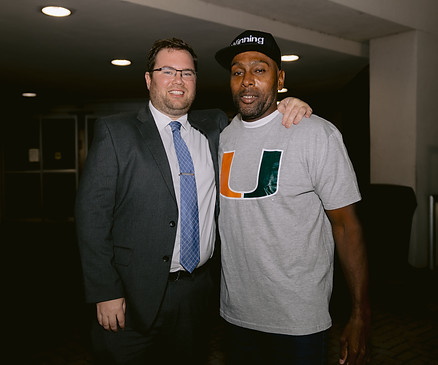
Along with earning his GED, a bachelor’s and master’s degree during a 26-year stint in prison, Dewey Bozella, 52, must have surely read “A Dream Deferred,” Langston Hughes’ signature poem of holding fast to aspirations and goals. Bozella didn’t let his dream of boxing “dry up like a raisin in the sun,” nor did he allow himself to become bitter and “fester like a sore” during his more than a quarter century behind bars for a crime he did not commit. What he did, upon his release from prison in October 2009, was train, non-stop, for, literally, the second fight of his life.
No one who knows Bozella’s story will dispute the fact that he has been a fighter all his life. That he survived and moved past his troubled days on the streets of New York is testimony to his strength, endurance, and character.
Vestiges from the first fight of his life most likely arise from the memory of witnessing his father beating his pregnant mother to death when he was nine years old and the recollection of losing two brothers to violent crimes when he was a young boy. A life of petty crime was on the wane when, in 1977, he was charged with the murder of Emma Crapser, 92, of Poughkeepsie, New York. Although no physical evidence or DNA evidence linked him to the crime, he was convicted primarily on the testimony of two convicts who eventually won release based on their testimonies.
Bozella’s case saw its share of legal wrangling throughout his imprisonment, and on four separate occasions he could have exited California’s notorious Sing Sing prison facility if he would only admit guilt. He maintained his position of innocence, however, throughout the multiple plea offers. After years of imprisonment his story made its way to the WilmerHale law firm which took up the case and helped secure his eventual release from prison.
But Dewey Bozella’s story does not end here.
Ever since his days of imprisonment he aspired to box in a single, professional fight. He had trained in prison and had become a champion, but he’d always wanted to take his skills beyond the prison’s walls to a larger audience. On October 15, 2011, he got the chance by engaging in his first professional boxing match in the Staples Center in Los Angeles, California. He won the match, which he called his “first, last, and only” professional fight. His opponent, Larry Hopkins, at age 30, was twenty-two years his junior. Bozella said that he used to “dream about this happening. It [a professional fight] was my dream come true.” Winning the match, however, did not deter him from his one-fight declaration. “This is a young man’s game,” he says. “I did what I came to do.”
A bevy of well-wishers called Bozella prior to his professional debut, including President Barack Obama who called on October 13th to offer his congratulations and to wish him well in his debut fight. No doubt the President’s phone call helped buoy Bozella’s stamina in the ring.
While this commentary centers primarily around a man’s unjust conviction, incarceration, and eventual release from prison, it is also a statement about the power of believing in oneself and holding fast to dreams no matter the circumstances and obstacles put before you. If Langston were alive today, I’m certain that he would be proud of Dewey Bozella and his refusal to succumb to the myriad experiences and incidents that helped shape his life. In the meantime, Bozella’s story of faith and determination might be another poem just waiting to be penned.